
 Facebook
 X
X
 Pinterest
 Copy Link
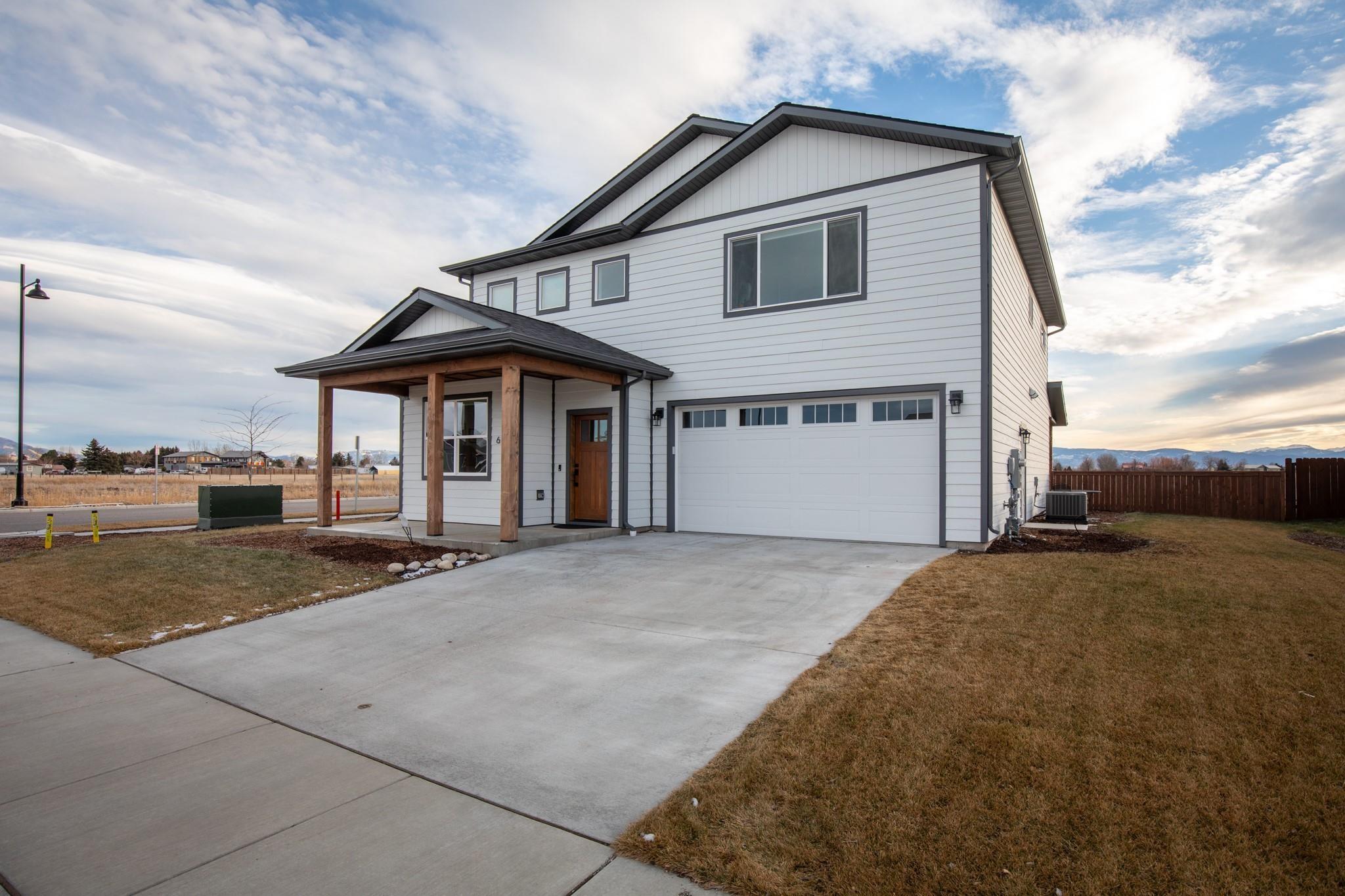
Seller Concessions in Gallatin County: Why Price Isn’t the Only Thing Buyers Should Negotiate
When most buyers think about negotiating on a home, they think about one number:
Purchase price.
If a house is listed for $700,000, the natural question becomes:
“How much below $700,000 can we get it for?”
That’s important.
But it isn’t the only number that matters.
Depending on the property, financing, seller, and current market conditions, there may be opportunities to negotiate terms that affect how much cash you need at closing or the overall economics of the purchase.
One of those tools is a seller concession, sometimes called a seller credit.
In today’s Gallatin County market, it’s worth understanding.
What Is a Seller Concession?
A seller concession generally means the seller agrees to contribute money toward certain buyer costs as part of the transaction.
Depending on the loan program and transaction, a seller credit may potentially help with allowable costs such as:
- Loan-related closing costs
- Title-related costs
- Prepaid expenses
- Other allowable settlement costs
The exact amount and what it can be used for depend on the buyer’s financing, loan program, lender requirements, purchase agreement, and other transaction details.
That’s why this is a conversation to have with your lender before writing the offer.
The important point is simple:
Purchase price isn’t the only financial term we can evaluate.
Why Seller Credits Matter Right Now
Current Gallatin County conditions make this conversation especially relevant.
According to Realtor.com’s August 2026 data:
Active Listings: 1,609
Median Days on Market: 53 days
Sale-to-List Ratio: Approximately 95%
Realtor.com currently characterizes Gallatin County overall as a buyer’s market.
That does not mean every seller will agree to concessions.
But it does tell us that negotiation is occurring and buyers have meaningful choices in at least some segments of the market.
When a seller is competing against several similar homes, terms that help a buyer complete the transaction may be worth discussing.
A Lower Price and a Seller Credit Are Not the Same Thing
This is where buyers should slow down and run the numbers.
Suppose we’re negotiating on a home listed at $700,000.
A buyer might focus entirely on getting the price reduced.
But another possibility could be negotiating a seller contribution toward allowable closing costs.
Those two strategies affect the buyer differently.
A lower purchase price can reduce the loan amount and monthly payment.
A seller credit may reduce the amount of cash the buyer needs at closing.
Which is better?
It depends.
Your loan structure, down payment, cash reserves, interest rate, and long-term plans all matter.
This is why I don’t like negotiating simply for the satisfaction of getting the seller to lower the price.
We should negotiate toward the result that actually helps you.
Cash-to-Close Matters
Buyers sometimes focus so heavily on the monthly mortgage payment that they underestimate how much cash they’ll need to complete the purchase.
Cash-to-close can include things such as:
- Down payment
- Closing costs
- Prepaid interest
- Initial escrow funding
- Homeowners insurance
- Other applicable expenses
Your Loan Estimate provides an estimated cash-to-close figure, and your final Closing Disclosure shows the amount you’ll actually need at closing.
A properly structured seller credit may reduce some of that upfront burden.
For a buyer who has strong income but wants to preserve cash after closing, that can be meaningful.
Why Would a Seller Agree to Pay a Buyer’s Costs?
Because sellers evaluate the entire offer, not just one line.
Imagine a home has been listed for 70 days.
The seller wants to move.
A qualified buyer makes a clean offer but asks for an allowable seller contribution toward closing costs.
The seller may decide that accepting the concession is better than:
- Continuing to carry the property
- Waiting for another buyer
- Making another price reduction
- Taking on additional months of taxes, insurance, utilities, or maintenance
That doesn’t mean the seller automatically says yes.
It means there’s a business decision to evaluate.
The Seller Isn’t Giving Away Free Money
This is important.
Seller concessions aren’t free money.
The Consumer Financial Protection Bureau points out that sellers may require a higher purchase price when agreeing to pay some buyer closing costs.
For example, a seller might be willing to accept one price without a credit and a somewhat higher price with one.
That can still be useful to the buyer because it may reduce the amount of cash required at closing.
But we’re changing how the transaction is structured—not magically eliminating the cost.
And if increasing the purchase price is part of the strategy, the property still needs to support the value required by the lender.
Seller Credits Can Be Useful After an Inspection
Seller concessions can also become relevant during the inspection process.
Suppose an inspection identifies a legitimate repair issue.
There may be several possible approaches depending on the contract and financing:
- Seller completes the repair
- Purchase terms are renegotiated
- Seller provides an allowable credit
- Buyer accepts the condition
- Additional evaluation occurs
Sometimes buyers prefer controlling the repair themselves after closing rather than having the seller complete it.
A credit may help preserve some cash for that purpose, depending on how the transaction is structured.
But remember:
A closing-cost credit does not repair the house.
If you’re accepting responsibility for a problem, understand the likely cost before making that decision.
Interest Rates Make the Structure of an Offer Important
As of September 10, 2026, Freddie Mac reported the national average 30-year fixed mortgage rate at 6.76%.
That’s up from 6.71% the previous week and 6.35% one year earlier.
At rates around this level, buyers are paying close attention to monthly affordability.
That means I want the buyer and lender communicating before we decide what to negotiate.
Depending on available loan options, a buyer may want to compare:
Option A: Lower purchase price
Option B: Seller contribution toward closing costs
Option C: Another lender-approved financing structure
Then look at:
- Cash needed at closing
- Monthly payment
- Interest expense
- How long you expect to own the home
- Cash reserves after closing
Don’t assume the lowest purchase price automatically creates the best financial result.
There Are Limits on Seller Concessions
Buyers shouldn’t assume they can simply ask for an unlimited seller credit.
Loan programs and lenders have rules governing seller contributions.
Limits can depend on factors such as:
- Loan type
- Down payment
- Occupancy
- Property type
- Actual allowable closing costs
You also generally can’t simply receive unused concession money as cash back because you negotiated more than your allowable costs.
That’s why the lender needs to be involved.
Before I write a specific seller concession into an offer, I want the buyer to know what their loan actually allows.
A Strong Offer Can Still Include a Seller Credit
Buyers sometimes worry:
“Won’t asking for closing costs make our offer look weak?”
Not necessarily.
Again, context matters.
A seller may prefer:
Offer A: Lower price with no credit
or
Offer B: Higher price with a seller credit
depending on the estimated net proceeds and the strength of the rest of the offer.
Other terms also matter:
- Financing strength
- Earnest money
- Inspection terms
- Closing timeline
- Contingencies
- Probability of closing
The goal is to structure an offer that works financially for the buyer while still making sense to the seller.
Don’t Ask for Concessions Just Because the Market Allows It
This is similar to the negotiation point from Week 29.
Just because something may be negotiable doesn’t mean you should automatically ask for everything.
Suppose a home is:
- Newly listed
- Correctly priced
- In excellent condition
- Difficult to replace
- Receiving significant showing activity
Asking for a large seller contribution may reduce the competitiveness of your offer.
Now consider another property:
- 90 days on market
- Multiple price reductions
- Vacant
- Competing with several similar homes
Completely different situation.
The strategy should match the property.
Sellers Should Understand This Too
Seller concessions aren’t automatically bad for sellers.
If you’re selling a home and receive an offer requesting a credit, don’t evaluate that line by itself.
Look at the estimated net.
Consider:
- Purchase price
- Requested credit
- Other seller-paid expenses
- Financing
- Contingencies
- Closing date
- Inspection terms
- Probability of closing
A $700,000 offer with a $10,000 credit isn’t necessarily worse than a $690,000 offer without one.
Run the numbers.
Then evaluate the risk and terms.
Read the Closing Disclosure
Before closing, buyers receive a Closing Disclosure detailing the final loan terms and costs.
The Consumer Financial Protection Bureau specifically recommends checking that any seller credit shown on the Closing Disclosure matches what was agreed upon.
Buyers should review:
- Loan amount
- Interest rate
- Monthly payment
- Closing costs
- Seller credits
- Cash to close
If something isn’t what you expected, ask questions before signing.
Closing shouldn’t be the first time you understand the numbers.
What I Want Buyers to Ask Before Writing an Offer
Before we negotiate a seller concession, I want answers to a few questions:
How much cash do you want to preserve?
Buying the house shouldn’t necessarily leave you with an empty bank account.
What does your lender allow?
We need actual loan-specific information.
How much leverage does this property give us?
Look at days on market, competition, condition, and pricing history.
What does the seller probably care about?
Price? Timing? Certainty? Simplicity?
What produces the best overall result?
Don’t negotiate one number in isolation.
The Bottom Line
Gallatin County buyers have more negotiating leverage in many parts of today’s market.
Use it intelligently.
Sometimes the right negotiation is a lower purchase price.
Sometimes it’s a seller contribution toward allowable closing costs.
Sometimes it’s repairs or another transaction term.
And sometimes the right property doesn’t offer much negotiating room at all.
The objective isn’t:
“How much can we get from the seller?”
It’s:
“How do we structure this purchase so it makes the most sense for you?”
If you’re considering buying in Gallatin County, I can help you evaluate the property, current competition, seller position, and financing options before we decide what terms to put in the offer.
Sources & Local Market Data
Realtor.com — Gallatin County Housing Market
https://www.realtor.com/local/market/montana/gallatin-county
Freddie Mac — Primary Mortgage Market Survey
https://www.freddiemac.com/pmms
Consumer Financial Protection Bureau — Loan Costs
https://www.consumerfinance.gov/owning-a-home/explore/learn-about-loan-costs/
Consumer Financial Protection Bureau — Closing Disclosure
https://www.consumerfinance.gov/owning-a-home/closing-disclosure/
Consumer Financial Protection Bureau — Mortgage Closing Costs
https://www.consumerfinance.gov/ask-cfpb/what-fees-or-charges-are-paid-when-closing-on-a-mortgage-and-who-pays-them-en-1845/
Market data is based on publicly available information and reflects general trends. Individual property performance may vary. Seller concessions, allowable closing costs, financing terms, and contribution limits vary by loan program, lender, property, and transaction. Buyers should confirm available financing options and allowable seller contributions directly with their lender. For a personalized market analysis, contact me directly.
