
 Facebook
 X
X
 Pinterest
 Copy Link
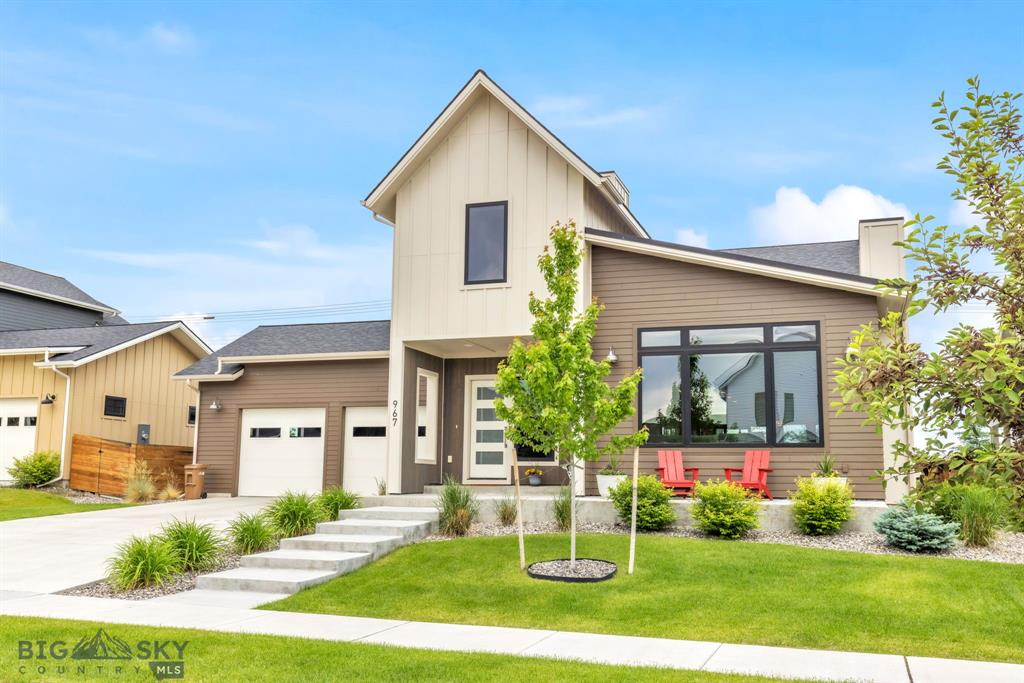
Pricing Your Gallatin County Home to Sell: Why the First Few Weeks Matter
When homeowners start thinking about selling, one of the first questions is usually:
“What should we list it for?”
And understandably, most sellers want to get as much as possible for their property.
But there’s an important difference between trying to get the highest possible price and simply starting with the highest possible list price.
Those aren’t necessarily the same strategy.
In today’s Gallatin County market, buyers have more choices in many segments than they did a few years ago. That makes accurate pricing increasingly important.
The goal isn’t to price your home low.
The goal is to position it correctly so buyers see value when your listing is new, attention is highest, and you have the best opportunity to create competition.
Here’s how I think sellers should approach pricing.
Your Home’s Value Isn’t Determined by What You Need From the Sale
This sounds obvious, but it’s worth saying.
The market doesn’t know:
- What you originally paid
- How much you spent remodeling
- How much you need for your next down payment
- What your neighbor says the house is worth
- What an online estimate shows
Buyers are comparing your home with the other properties available to them.
Ultimately, the market responds to the relationship between:
Price + Condition + Location + Competition
That’s why determining market value requires looking outward at the current market rather than inward at what we’d like the number to be.
Current Gallatin County Conditions Make Pricing Important
Recent public housing data illustrates why this matters.
As of June 2026, Realtor.com reported approximately 1,497 active listings in Gallatin County, up about 18.5% from one year earlier.
The countywide median days on market was 56 days, roughly 17.8% higher than a year earlier.
Those are broad countywide numbers and shouldn’t be applied directly to an individual property.
But they tell us something important:
Buyers have choices.
When buyers have more options, an overpriced property becomes easier to skip.
The First Few Weeks Are Important
When your home first hits the market, it’s new.
Buyers who have been watching your price range see it.
Agents working with those buyers see it.
Online real estate platforms distribute it.
That initial exposure is valuable.
If buyers immediately conclude the home is overpriced, some may decide to wait rather than make an offer.
Then something happens that sellers don’t always anticipate:
The listing gets older.
Instead of buyers asking:
“How quickly do we need to move?”
They may start asking:
“Why hasn’t this sold?”
That’s a very different negotiating position.
Starting High “Just to See What Happens” Has a Cost
I understand the logic.
A seller may think:
“Let’s start $50,000 higher. We can always reduce it later.”
Technically, that’s true.
But the question isn’t whether we can reduce the price later.
It’s whether starting too high causes us to miss buyers during the period when the listing has the most attention.
Consider a hypothetical property that market data suggests should be positioned around $750,000.
If we list at $825,000, buyers searching up to $800,000 may never see it.
Meanwhile, buyers shopping around $825,000 may compare it with homes that offer more.
Eventually, we reduce the price.
But now we’re trying to recreate the excitement we had when the listing was brand new.
Sometimes that works.
Sometimes it doesn’t.
Price Reductions Aren’t Automatically Bad
There is nothing inherently wrong with reducing a price.
Markets change.
New competition appears.
Buyer feedback gives us additional information.
Sometimes a price adjustment is exactly the right decision.
The issue is when the reduction was predictable before the home ever went on the market.
A strategic adjustment based on new information is different from chasing the market downward because the initial pricing wasn’t supported by the data.
Comparable Sales Matter—but They’re Not the Whole Story
Recent comparable sales are one of the most important tools we have when evaluating value.
I look at properties that are similar in areas such as:
- Location
- Size
- Age
- Condition
- Lot size
- Property type
- Features
- Quality
But sold properties tell us where the market has been.
We also need to look at where the competition is today.
If three similar homes are currently available, buyers will compare yours with all three.
That’s why I want to understand:
Recently Sold Properties
What have buyers actually paid?
Pending Properties
What has recently attracted an offer?
Active Competition
What else can a buyer purchase today?
Expired or Withdrawn Listings
What did the market reject?
Looking at all four gives us a much better picture than simply finding the highest nearby sale.
Price Per Square Foot Has Limitations
Price per square foot can be useful.
But it shouldn’t be used by itself.
Two 2,000-square-foot homes can have completely different values because of:
- Lot size
- Views
- Condition
- Garage configuration
- Updates
- Floor plan
- Location
- Outdoor living
- Quality of construction
This is particularly important in Gallatin County, where properties can vary dramatically even within relatively small geographic areas.
Averages provide context.
They don’t replace property-specific analysis.
Bozeman Isn’t Belgrade—and Neither Is a Rural Acreage Property
Gallatin County is not one housing market.
Pricing strategy for a:
- Downtown Bozeman home
- Belgrade subdivision property
- Four Corners townhome
- Manhattan home
- Rural acreage property
- Big Sky property
Can be completely different.
Even within Bozeman, individual neighborhoods and price ranges can behave differently.
That’s why I don’t like relying too heavily on broad headlines such as:
“Gallatin County prices are up.”
or
“The market is slowing.”
Both statements can be technically true while being almost useless for pricing your particular house.
We need to know what buyers are doing in your segment of the market.
Condition Changes the Pricing Conversation
Two otherwise similar homes aren’t necessarily direct competitors if one is completely updated and the other needs significant work.
Buyers calculate more than renovation cost.
They also think about:
- Time
- Hassle
- Contractor availability
- Uncertainty
- Whether they can afford improvements after closing
That means sellers need to evaluate condition realistically.
A home doesn’t need to be perfect.
But its price should make sense relative to its condition.
Online Home Estimates Are a Starting Point—not a Pricing Strategy
Automated home valuations can be useful for general information.
But an algorithm hasn’t necessarily walked through your house.
It may not fully understand:
- Your view
- Interior updates
- Condition
- Floor plan
- Outbuildings
- Location within the neighborhood
- Deferred maintenance
- Recent competing listings
In a subdivision with highly similar homes, automated estimates may have useful data.
For a custom or rural Gallatin County property, the range of variables becomes much larger.
I wouldn’t make a major financial decision based solely on an automated estimate.
The Highest Offer Isn’t Always the Best Offer
Pricing strategy isn’t finished once offers arrive.
Suppose you receive:
Offer A: Higher purchase price with significant concessions and multiple contingencies.
Offer B: Slightly lower purchase price with stronger financing, fewer concessions, and cleaner terms.
Which one is better?
Maybe A.
Maybe B.
The answer depends on the details.
That’s why sellers should evaluate:
- Net proceeds
- Financing
- Contingencies
- Closing timeline
- Requested concessions
- Probability of closing
The goal is the strongest overall outcome, not simply the largest number printed at the top of the contract.
What If We Price Slightly Below Market?
This can occasionally be a useful strategy, but I don’t believe every home should intentionally be underpriced to create a bidding war.
That strategy depends on:
- Property type
- Price range
- Competition
- Current demand
- Seller goals
The right pricing strategy isn’t a gimmick.
It’s a decision based on the specific property and current market.
Sometimes the right number is aggressive.
Sometimes it’s conservative.
Sometimes it’s exactly where the comparable sales point us.
What I Want to Know Before Recommending a List Price
Before recommending a price, I want to understand:
- Recent comparable sales
- Current competition
- Pending activity
- Days on market
- Price reductions
- Property condition
- Unique features
- Likely buyer profile
- Seller timeline
- Current financing environment
Mortgage rates matter here too.
As of August 20, 2026, Freddie Mac reported the national average 30-year fixed mortgage rate at 6.65%.
That rate doesn’t tell us what your house is worth.
But financing costs affect purchasing power, which influences how buyers evaluate price.
Pricing doesn’t happen in a vacuum.
The Bottom Line
The goal of pricing your home isn’t to find the highest number someone is willing to put on a listing agreement.
It’s to determine the price and strategy most likely to produce the strongest overall result.
In today’s Gallatin County market, buyers have more choices in many segments and are paying close attention to value.
That makes the opening weeks of a listing important.
My approach is straightforward:
Look at the data. Look at the competition. Evaluate the property honestly. Then build the pricing strategy around the seller’s goals.
If you’re considering selling, I’m happy to prepare a property-specific market analysis and show you the actual comparable sales, current competition, and pricing scenarios before you make any decisions.
Sources & Local Market Data
Realtor.com — Gallatin County Housing Market
https://www.realtor.com/local/market/montana/gallatin-county
Realtor.com — Bozeman Housing Market
https://www.realtor.com/local/market/montana/gallatin-county/bozeman
Freddie Mac — Primary Mortgage Market Survey
https://www.freddiemac.com/pmms
National Association of REALTORS® — Research & Statistics
https://www.nar.realtor/research-and-statistics
Market data is based on publicly available information available at the time of publication and reflects general market trends. Countywide and citywide statistics should not be interpreted as the value or expected performance of an individual property. Real estate conditions can vary significantly by location, property type, condition, price range, and individual property. Mortgage rates and financing conditions can change frequently. Individual property performance may vary. For a personalized market analysis, contact me directly.
